Appointment Letter or Visit Summary: What Each Document Is For
Learn how to tell an appointment letter from a visit summary, find the details each contains, and decide what to do with the document you received.
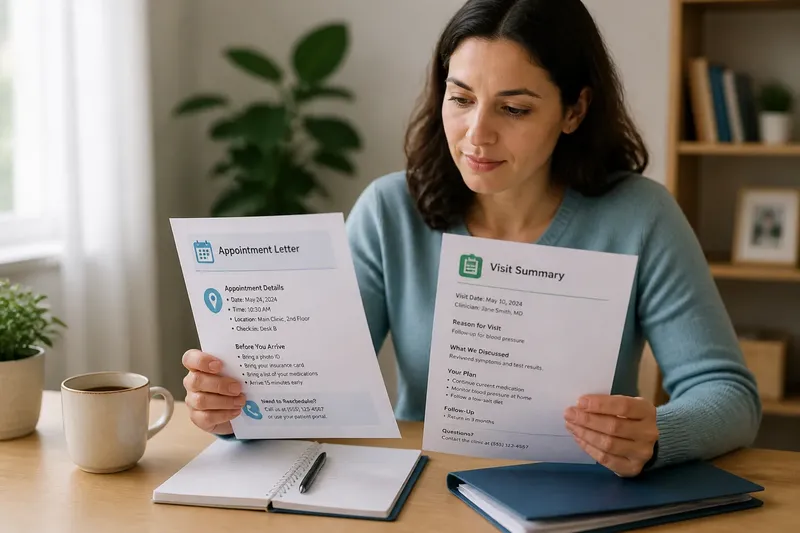
Trying to tell whether a health record is an appointment letter or a visit summary? Start with its timing: an appointment letter usually arrives before a visit and tells you how to attend, while a visit summary is generally created after an encounter and records what was discussed or planned. The distinction matters when you need to confirm a date, prepare for care, or understand what happened afterward.
Documents vary by clinic, hospital, and patient portal, so look at the purpose and the details rather than relying on the file name alone. A subject line such as “Visit information” may be less revealing than the appointment date, instructions, and clinical notes inside.
Start with the date
Find the date the document was created or sent, then compare it with the visit date printed inside. A letter sent ahead of an upcoming appointment points toward scheduling and preparation; a record created after a completed encounter is more likely to summarize care.
Dates can be confusing when a portal groups documents together or a letter is reissued. Check whether the appointment is described as upcoming, scheduled, completed, or past. If the record has no clear timing, use its contents as the next clue rather than guessing from its title.
Read for purpose
An appointment letter is meant to help you get to the right service at the right time and understand what to do before arriving. It often names the clinic or department, gives the appointment date and time, and explains where to check in. It may also say how to contact the service if you need to change the appointment.
A visit summary serves a different purpose: it captures information about an encounter that has already taken place. Depending on the setting, it may list the clinician, the reason for the visit, relevant findings, instructions, medication changes, follow-up plans, or referrals. It is a record of care, not simply a reminder to attend.
Imagine you open a document that shows a clinic address, check-in instructions, and a request to bring a medication list, but no account of a conversation. That points to an appointment letter: the useful next move is to note the logistics and prepare the requested information. If instead it describes a discussion, plan, or follow-up after a completed visit, treat it as a visit summary and review it for anything you need to clarify.
Check the contents
Scan the page in a consistent order. First look for the service name and date; then check whether the language is about attending or about care already provided. Finally, look for contact details and any action requested of you.
- Appointment details: A future date, time, location, or check-in point usually signals an appointment letter.
- Preparation instructions: Directions to bring records, arrive at a particular entrance, or follow a stated preparation request are commonly associated with an appointment.
- Encounter details: A completed-visit date, clinician name, or description of the reason for care suggests a visit summary.
- Care plan: Follow-up, referrals, medication information, or instructions discussed during a visit are typical summary content.
- Response route: A number or portal option for rescheduling fits appointment logistics; a contact route for questions about the documented plan may appear in a summary.
These clues are useful, but no single item settles the question. For example, a visit summary might include the next appointment date, while an appointment letter might mention why you are being seen. Look at the document’s main job: organizing a future visit or recording a completed one.
Handle each document
For an appointment letter, confirm that the date and service match what you expect. Check the location, arrival instructions, and any requested preparation; if a detail conflicts with another message, contact the clinic using a number from its official site or patient portal. Keep the letter accessible until you have attended or the appointment has been changed.
For a visit summary, read the plan and note anything unclear, such as a follow-up instruction you do not understand or a medication entry you believe is inaccurate. Use the clinic’s stated contact method to ask for clarification or a correction. Keep the summary with your health records if it may help you explain the visit to another clinician.
Follow the document’s stated instructions, and where the right action depends on a medication label, manufacturer instructions, or local rules, use those directions or ask a qualified health professional. A summary is useful for communicating what was recorded, but it does not replace personalized advice from a clinician.
When labels mislead?
Can an appointment letter include medical details?
Yes. It may mention the reason for the appointment or include preparation information, but its central purpose is to arrange attendance. Look for the future visit details and instructions that organize the appointment.
Can a visit summary include a future appointment?
Yes. A summary may record a follow-up date or referral alongside the account of a completed encounter. The presence of a future date does not make the whole document an appointment letter.
What if the document has no clear title?
Use its timing, main purpose, and contents together: logistics for a visit that has not happened suggest a letter, while a record of discussion and care planning suggests a summary. If those clues conflict, ask the clinic what kind of document it is and which parts you should act on.
What if a visit summary seems wrong?
Compare it with what you remember and identify the specific entry that concerns you. Contact the clinic through its official channel to ask how to have the record reviewed or clarified, rather than editing the clinical document yourself.
Keep records findable
Save each document with a clear file name that includes the document type and visit date, such as “Appointment letter — family clinic” or “Visit summary — primary care.” If you use a patient portal, check whether it stores letters and summaries in separate sections; if not, a small folder on your device can keep them distinct.
When a clinician asks what happened at an earlier visit, a visit summary can help you point to the recorded plan, while an appointment letter can help establish when and where care was scheduled. Knowing which document you have makes your health records easier to use and helps you ask a more precise question about the next step.